Aluminum is often considered an easy-to-machine material due to its excellent machinability, light weight, and corrosion resistance. Its widespread use in aerospace, automotive, packaging, and mold manufacturing has cemented its place in modern engineering. However, despite this perception, machining aluminum—especially its various alloys—comes with a unique set of challenges that require specialized cutting tools and strategies.
Aluminum is rarely used in its pure form in industrial applications. Instead, it’s alloyed with elements like copper, magnesium, silicon, and zinc. These alloys fall into categories such as cast and wrought types and can be heat-treatable or non-heat-treatable. Their machinability varies widely, depending on composition and manufacturing method. Some aluminum alloys are only half as machinable as commercially pure aluminum.
Key Challenges in Machining Aluminum
- Chip Evacuation:
Aluminum generates long, curly chips that may wrap around the cutting tool, hindering chip evacuation and affecting surface finish. - Built-Up Edge (BUE):
Aluminum tends to stick to the cutting tool, forming a BUE that negatively impacts surface finish and dimensional accuracy. - Surface Galling:
Adhesion between the tool and material can result in galling, which diminishes surface quality. - Machining Stability:
Due to its relatively low stiffness, aluminum can lead to vibration during machining, reducing accuracy.
Cutting Tool Innovations to the Rescue
Advanced tooling solutions have emerged to combat these issues:
- Cutting Materials:
Carbide grades, coated tools, and polycrystalline diamond (PCD) tips enhance tool life and performance, especially in high-speed applications. - Geometry Optimization:
Tools with sharp edges, optimized rake and clearance angles, and chipbreakers facilitate smooth cutting, better chip flow, and reduced BUE. - Tool Design:
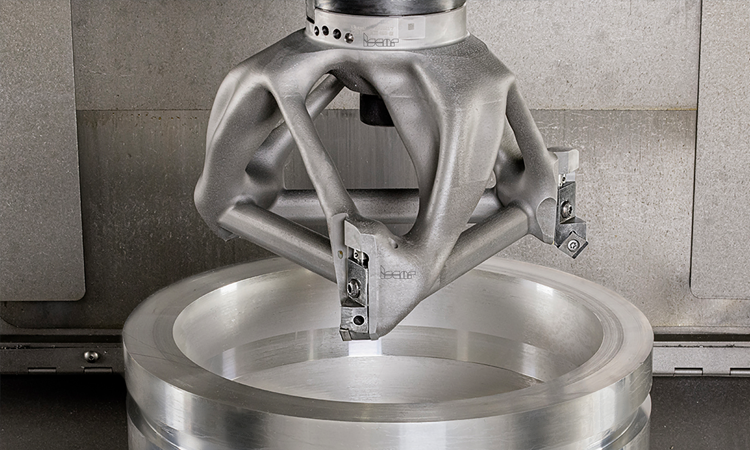
High-speed aluminum machining demands dynamically balanced tools with excellent coolant delivery. Tools featuring pinpointed coolant supply and high-pressure channels—often integrated using additive manufacturing—improve chip evacuation and minimize galling and BUE.
ISCAR’s Solutions for Aluminum Machining
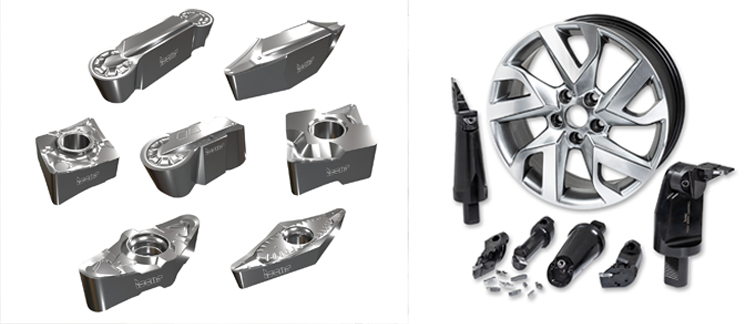
ISCAR has developed a wide range of cutting tools tailored for aluminum:
- DLC-Coated Tools:
Diamond-like carbon coatings combine hardness and wear resistance with low friction, reducing adhesion and BUE. ISCAR’s IC1520 (for turning) and IC1508 (for milling) grades are effective up to 12% silicon alloys. - Quick-Change Modular Tools:
Designed for applications like aluminum wheel machining, these dovetail-connected tools provide stability under high-load conditions. - HELIALU Milling Inserts:
High-accuracy inserts with polished, positive geometries for high-feed milling of aluminum and aluminum-lithium alloys. - MULTI-MASTER Innovations:
New modular milling heads, including 3-flute and barrel-shaped geometries, offer vibration resistance and suitability for complex 5-axis machining. - Additive Manufacturing:
3D-printed internal coolant channels enhance HPC and MQL applications. These tools, adaptable via MULTI-MASTER and FLEXFIT platforms, offer exceptional performance in abrasive, high-silicon alloys.
Aluminum may seem simple to machine, but only if you’re equipped with tools designed for its complexities. With the right materials, geometry, and cooling strategies—like those pioneered by ISCAR—aluminum machining can indeed live up to its reputation for efficiency and quality.