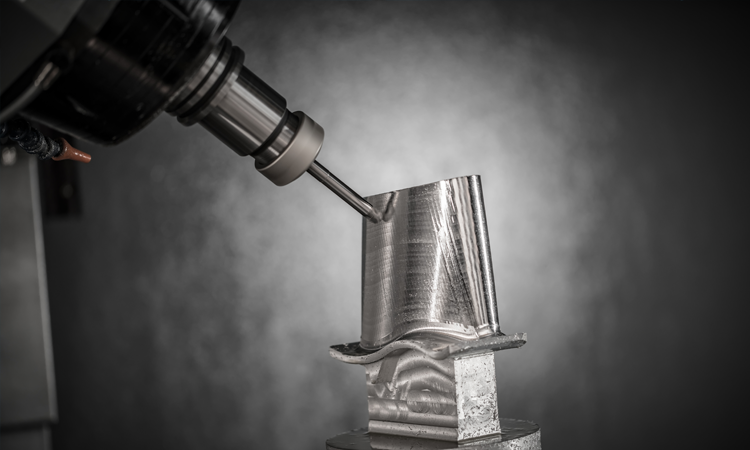
The aerospace industry‘s relentless pursuit of lighter, stronger, and more heat-resistant materials has firmly placed titanium alloys at the forefront of aircraft and spacecraft design. These remarkable materials, while offering exceptional performance characteristics crucial for components operating under extreme stress and temperature, constitute a significant portion of modern aircraft, with Ti-6Al-4V being the most commonly used alloy, accounting for approximately 50% of titanium applications. However, taming titanium in machining presents significant challenges that demand advanced strategies.
Titanium alloys are notorious for their low thermal conductivity (around 6.7 W/m·K compared to stainless steel’s ~16.2 W/m·K), high chemical reactivity, and tendency to work harden. This leads to several formidable machining hurdles: about 80% of the heat generated during machining concentrates at the cutting edge, causing rapid tool wear and thermal damage. This also results in higher costs; titanium machining typically incurs higher expenses due to slower cutting speeds, increased tool wear, and stringent quality control.
Traditional machining approaches often fall short, leading to excessive tool degradation and compromised part quality. For instance, titanium machining generally requires significantly lower cutting speeds, often 80-100 feet per minute (FPM), compared to 70-100 SFM (21-30 m/min) for stainless steel. This directly impacts cycle times and productivity. Therefore, advanced machining strategies are essential to unlock the full potential of titanium.
One crucial approach involves optimizing cutting tool geometry and material. Specialized carbide and polycrystalline diamond (PCD) tools with advanced coatings are increasingly employed. These coatings are designed to withstand the intense heat and friction generated during titanium cutting, significantly prolonging tool life. Positive rake angles and sharp cutting edges are also vital for minimizing cutting forces and heat generation.
Effective heat management is paramount. High-pressure coolant (HPC) delivery systems, often directed precisely at the cutting edge, are crucial for dissipating heat and facilitating chip evacuation. Studies show that implementing HPC can increase tool life by up to 30% and lead to 20% to 30% productivity increases. For example, in milling Ti-6Al-4V alloy, HPC can lower average cutting temperature by 11.21–21.57% and reduce tool wear. Cryogenic machining, utilizing extremely low temperatures, is also gaining traction; research indicates it can achieve 32.5% reduction in main cutting force and 24% improved surface quality compared to dry cutting, particularly at higher speeds.
Advanced cutting strategies, such as high-speed machining (HSM) and dynamic milling, are being implemented to improve efficiency. HSM, with optimized toolpaths and higher cutting speeds, can reduce machining time by six to ten times compared to conventional methods while enhancing tool lifespan by maintaining consistent spindle speeds and dissipating heat more effectively. Dynamic milling, which involves controlled engagement with the workpiece, helps to distribute cutting forces and minimize vibrations, leading to better surface quality and tool longevity.
Furthermore, the integration of digital tools like machining simulation software plays a crucial role. The global Digital Twin market in Aerospace and Defense is projected to reach USD 50.7 billion by 2034 from USD 2.1 billion in 2024, growing at a CAGR of 37.5%. Such simulation tools allow engineers to virtually optimize cutting parameters and toolpaths before physical machining, saving valuable time and resources. 73% of aerospace and defense organizations have a long-term roadmap for digital twin technology, with investments projected to rise by 40% in 2023, demonstrating a clear recognition of its value in optimizing operations and saving up to 15% on costs.
Taming titanium and other tough aerospace alloys demands a holistic approach that combines advanced cutting tools, optimized machining parameters, effective heat management, innovative cutting strategies, and the intelligent use of digital technologies. With the Indian aerospace titanium machining market valued at USD 78.81 million in 2023 and projected to grow at a CAGR of 15.2% to USD 279.23 million by 2032, mastering these advanced machining techniques will be a key differentiator for manufacturers in Thane and across India. By embracing these advancements, Indian companies can elevate their manufacturing capabilities, meet global quality standards, and solidify their position as vital players in the global aerospace value chain.