Next-Generation Machining Solutions for Engine Blocks, Cylinder Heads, and Transmission Components
In an era where automotive performance, efficiency, and sustainability are paramount, powertrain machining stands at a transformative crossroads. The once-familiar processes used to manufacture engine blocks, cylinder heads, and transmission components are being redefined by advanced materials, tighter tolerances, and smarter production systems. The pursuit of powertrain precision is not just about speed or accuracy—it’s about re-engineering how motion itself is manufactured.
Evolving Engine Block Machining
Engine blocks remain the backbone of automotive propulsion, but their manufacturing demands have evolved dramatically. With the rise of turbocharged downsized engines and hybrid configurations, OEMs require micron-level accuracy to achieve higher compression ratios and improved thermal management.
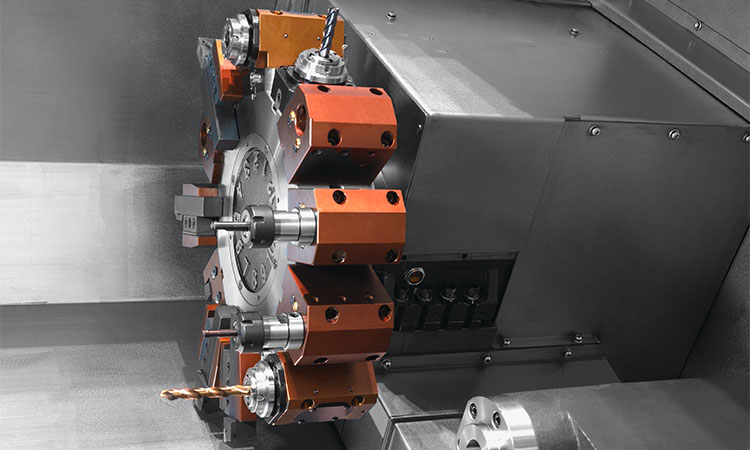
Advanced horizontal machining centers, equipped with multi-axis capability and adaptive control software, are now standard. Automation-driven pallet systems ensure consistent accuracy, while spindle vibration monitoring enables real-time correction of machining errors.
Lightweighting trends have led to an increased use of aluminum and compacted graphite iron (CGI)—both of which present new challenges. Aluminum demands ultra-fast material removal with minimal burr formation, while CGI requires cutting tools with high toughness and thermal stability. As a result, PCBN and CVD-coated carbide tools are now integral to powertrain manufacturing lines worldwide.
Cylinder Heads: Precision Meets Performance
Cylinder heads are the nerve centers of combustion efficiency. The migration toward hybrid and alternative-fuel engines is reshaping their geometry, introducing complex coolant passages, integrated exhaust manifolds, and tighter sealing surfaces.
To meet these complexities, machine tool builders are integrating 5-axis simultaneous machining and in-process probing systems. Digital compensation algorithms now automatically adjust tool paths to account for thermal expansion, enabling repeatable sub-10-micron tolerances.
In addition, electrochemical machining (ECM) and additive-subtractive hybrid systems are being introduced for intricate ports and channel geometries that were once impossible to achieve conventionally. These innovations are not only improving performance but also reducing tool wear and cycle times—vital in large-scale engine production.
Transmission Machining: Smooth Power Transfer
The transition to hybrid and electric powertrains has not diminished the role of transmissions—it has redefined it. Today’s high-efficiency gearboxes require superior surface finishing, perfect concentricity, and ultra-tight clearances.
The latest generation of machining centers for transmission housings and gear shafts employs high-speed honing, gear grinding, and superfinishing technologies. Machine builders are integrating torque-based feedback systems and digital twin simulations to ensure flawless synchronization between mating gears.
EV-specific transmissions—often single or dual-speed systems—require even higher precision to achieve silent operation and long-term durability. Consequently, the focus has shifted to vibration-free cutting, precision boring, and automated part verification using inline CMMs.
The Digital Edge: Smart Powertrain Machining
Across global automotive hubs, machining shops are embracing AI-driven process optimization and IoT-enabled monitoring to enhance quality and throughput. Predictive analytics are reducing unplanned downtime by up to 30%, while real-time feedback loops ensure zero-defect production environments.
From India’s emerging EV component suppliers to Europe’s precision gear specialists, the next decade of powertrain machining will be defined by data-driven precision and adaptive intelligence.
As combustion, hybrid, and electric architectures coexist, one thing remains certain: the pursuit of powertrain perfection will continue to drive machining innovation—one micron at a time.