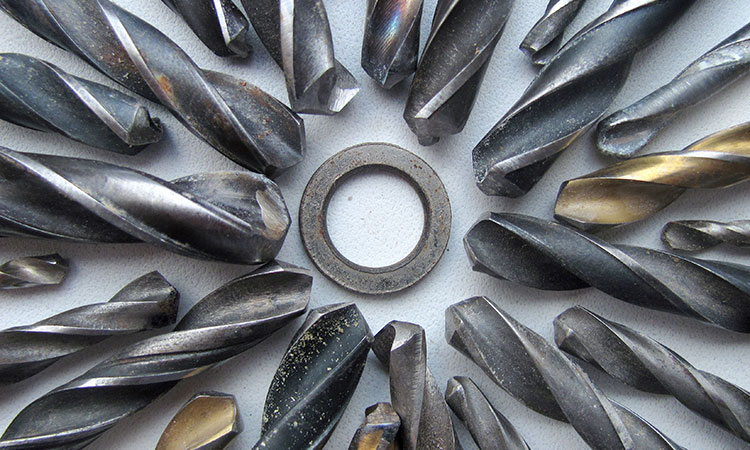
Spotlight on carbide, PCD, and CBN tooling transforming automotive machining efficiency
The global automotive industry is accelerating toward electrification, lightweighting, and higher precision—and cutting tools lie at the heart of this transformation. As automakers transition to complex alloys, composite structures, and tighter tolerances, toolmakers are pushing boundaries with innovations in carbide, polycrystalline diamond (PCD), and cubic boron nitride (CBN) tooling. These advancements are not only enhancing performance and productivity but also redefining how automotive components are machined across the globe.
Carbide Tools: Still the Backbone of Automotive Machining
Carbide tools continue to dominate the automotive machining landscape, accounting for nearly 45% of all cutting tool applications worldwide, according to a 2025 report by Grand View Research. Their unique combination of hardness and toughness makes them ideal for machining engine blocks, crankshafts, and transmission housings.
Recent innovations in nanograin and ultra-fine carbide grades, combined with advanced PVD coatings like TiAlN and AlCrN, have extended tool life by up to 50% and improved heat resistance for dry and high-speed cutting environments. Indian toolmakers in Pune, Aurangabad, and Chennai are also introducing carbide inserts with chipbreaker geometries optimized for aluminum and stainless steel, catering to both ICE and EV components.
PCD Tooling: The EV Revolution’s Cutting Edge
The rapid adoption of electric vehicles (EVs) has shifted focus to lightweight materials like aluminum, copper, and composites, where PCD tooling truly excels. With hardness second only to diamond, PCD tools deliver outstanding wear resistance and mirror-like finishes critical for battery housings, inverter covers, and e-motor components.
A study by the European Association of Machine Tool Industries (CECIMO) revealed that using PCD tools can reduce cycle times by up to 60% in aluminum component machining while offering tool life 10–15 times longer than carbide equivalents. This makes them indispensable for high-volume automotive production lines.
In India, OEMs such as Tata Motors and Mahindra Electric are increasingly relying on PCD reamers and milling cutters for precision components, supported by domestic suppliers like Miranda Tools, Renuka Tools, and WIDIA India expanding their PCD portfolios.
CBN Tools: Powertrain Precision for Hard Materials
Even as EVs grow, Internal Combustion Engines (ICEs) and hybrid systems remain crucial in global markets. Here, Cubic Boron Nitride (CBN) tools shine. With exceptional thermal and wear resistance, CBN tooling is ideal for hardened steels (above 55 HRC) used in gear, camshaft, and bearing surfaces.
According to Allied Market Research, the global CBN tools market is expected to reach USD 2.1 billion by 2030, growing at 8.2% CAGR, driven by the demand for tighter surface finishes and longer tool life. CBN inserts can maintain precision up to 0.005 mm even in dry cutting—making them essential for sustainability-focused machining operations that minimize coolant use.
Japanese and German automakers lead adoption, but India is catching up—especially in Tier-1 suppliers around Gurgaon and Pune, where CBN-tipped inserts are increasingly used in final gear finishing for both two-wheelers and commercial vehicles.
Digital and Sustainable Tooling: The Next Frontier
The integration of IoT, AI, and tool condition monitoring systems is transforming the way cutting tools are used and maintained. Smart toolholders embedded with sensors now track vibration, temperature, and tool wear in real time, enabling predictive maintenance that minimizes downtime.
Moreover, tool coatings are evolving toward sustainable chemistry, reducing harmful emissions during manufacturing. Major players like Sandvik Coromant, Kennametal, and Seco Tools are pioneering recyclable carbide programs, reclaiming up to 95% of tungsten from worn-out tools to reduce mining impact.
Precision Tools Powering the Future of Mobility
From carbide’s versatility to PCD’s precision and CBN’s durability, cutting tools are the silent enablers of every automotive innovation. As mobility transitions toward electrification and sustainability, the cutting tool industry is adapting with smarter materials, digital integration, and eco-conscious production.
By 2030, the automotive cutting tools market is projected to surpass USD 14 billion globally, and India’s share—currently around 7%—is expected to double as local manufacturers ramp up capability. The next generation of cutting tools won’t just machine metal—they’ll shape the future of clean, connected, and efficient mobility.