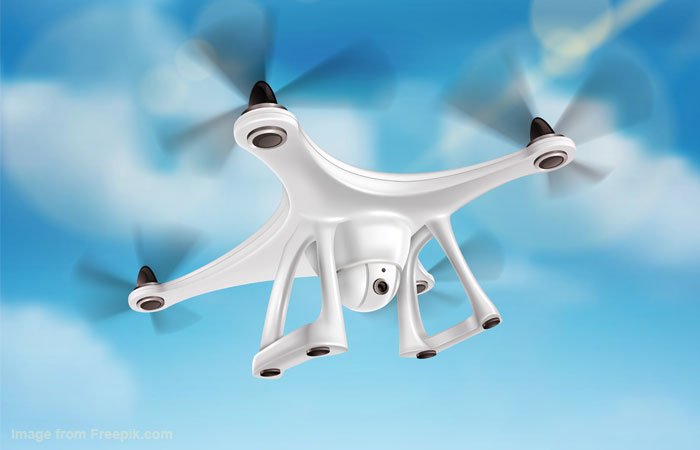
Drone manufacturing uses a combination of precision machining, composite fabrication, additive manufacturing, and electronics assembly and testing.
The specific machining processes depend on whether one is manufacturing the airframe, motors, propellers, landing gear, gimbal, or other structural components.
In the manufacturing of Drones one needs to give due weightage to considerations of weight, material compatibility, machining tolerances, Electronics assembly testing etc.
- Weight reduction: Lightweight materials (carbon fiber, aluminum, titanium) and pocketed designs are used to maximize flight time.
- Tight tolerances: Motor mounts, bearing fits, and gimbal assemblies often require high precision to reduce vibration and improve stability.
- Material compatibility: Carbon fiber requires specialized tooling and dust extraction, while aluminum benefits from optimized cutting parameters to achieve good finishes.
- Scalability: Prototypes often use CNC machining and 3D printing, while high-volume production shifts toward injection molding and automated composite manufacturing.
Typical Materials used for Drone components are:
- Aluminum 6061-T6
- Aluminum 7075-T6
- Magnesium alloys
- Carbon fiber laminate
Drone materials are primarily selected to make drone components, light weight, yet strong, and will give a good finish and precision (+/- 0.02 or better)
- High precision (±0.02 mm or better)
- Lightweight components
- Excellent surface finish
- Ideal for prototypes and production
Drone components that are machined can be divided into CNC turned components or CNC – machining center components.
Typical CNC Machining Center Components
Aluminum drone frames, Motor mounts, Gimbal brackets, Camera housings, Flight controller enclosures, Heat sinks etc.
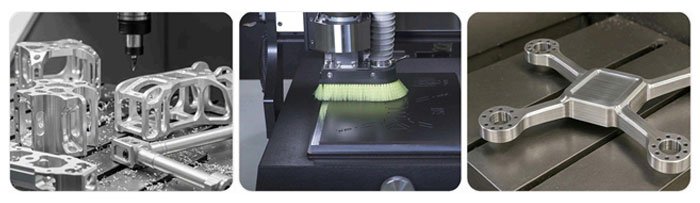
Only after the design is approved, can the machining process be decided using the CAM software to generate machining paths which are then recognized by the machine’s controller via a post processor -typically developed by the software provider- eg SolidWorks, Mastercam, Unigraphics or
the MTM : These software’s have a CAD component in 3D along with a FEA module to simulate and analyze the strength of the structure after designing the component. The components are machined using appropriate CAM software’s on 3/ 5-axes CNC machining centers to get the right consistency, accuracy and speed to be competitive.
Typical CNC Turned Components For Drones
The typical components are, motor shafts, propellor adaptors, bushings, spacers, landing gear connectors etc.
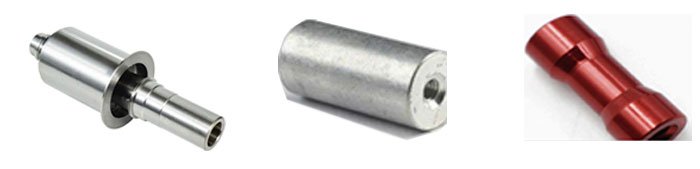
Typical materials are Stainless steels, Titanium, Aluminum, brass; These components are generally machined on CNC turning centers to start with , but as the volumes build up and since most
components can be machined from bar stock 35mm or less, the investments turn to Swiss Automats that that are multi axis with a main spindle & sub spindle to do the complex operations of CNC turned drone components in one set up giving a high degree of productivity along with dimensional consistency.
Other Manufacturing Processes Used In Drone Manufacturing Are
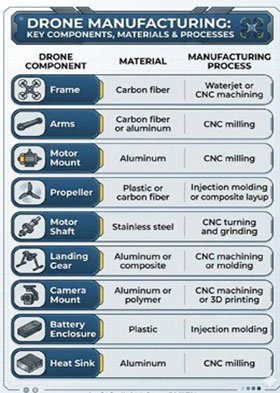
- Laser Cutting: For carbon fiber sheets, Thin aluminum plates, acrylic covers, gaskets etc. Typical applications are for racing drone frames, electronic mounting plates etc. Basic advantage of laser cutting is lower prototype costs and good accuracy.
- Water jet machining: is used for No heat-affected zone, minimal distortion and clean edges on composites. Typical materials – titanium, composite plates, aluminum, carbon fiber.
- Electrical Discharge Machining(EDM): This process is best applied for components with complex internal geometries like precision molds.
- Grinding: Typical components with high dimensional accuracies and surface finish requirements, like motor shafts, mating surfaces, bearing seats etc.
- Additive Machining for 3D printed Components: Very useful for prototype components or parts with complex geometries. Typical components: Prototype frames, Camera mounts, Battery holders, Landing gear.
- Sheet metal fabrication: Mainly for battery enclosures and protective housing punching and riveting.
- Injection Molding: Required for propellors, landing gear, battery housing.
- Surface Finishing: Anodizing (aluminum), Powder coating, Polishing, Hard anodizing. After the machining is done on the above type of components, they are checked for the stringent parameters pre-defined for surface finish ( free of burrs on all sides) and surface finish , before the components go to the sub-assemblies, electronic component assemblies and finally going in for the final drone assembly.
After this the drone goes in for functional testing, calibration as per specifications and finally for flight testing.