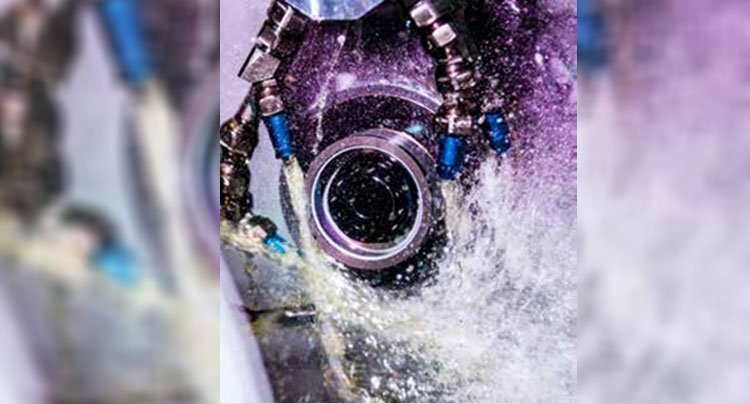
 Heavy engineering and energy-system manufacturing operate at the intersection of massive components, demanding materials and uncompromising precision. From turbine components and engine casings to transmission systems and complex industrial assemblies, machining these parts requires more than advanced machine tools—it requires complete control of the machining process.
One often overlooked element is the metalworking fluid. The right grinding oil, cutting fluid or EDM dielectric can directly influence productivity, surface integrity, tool performance, machine cleanliness and operating costs. The source material highlights how advanced fluid technologies are increasingly becoming process enablers rather than simple consumables.
Machining Difficult Materials
Energy and heavy-engineering components frequently demand machining strategies capable of handling challenging materials and complex geometries. In aerospace-oriented applications, for example, nickel-based superalloys such as Inconel and Nimonic present significant thermal and machining challenges. Advanced grinding fluids such as DiaGrind IN and SintoGrind IN are designed to provide thermal stability, surface-quality control and consistent grinding performance in such demanding environments.
The same principle applies across precision-heavy manufacturing: controlling heat, friction and debris is essential to maintaining dimensional accuracy and component integrity.
Grinding: A Critical Productivity Driver
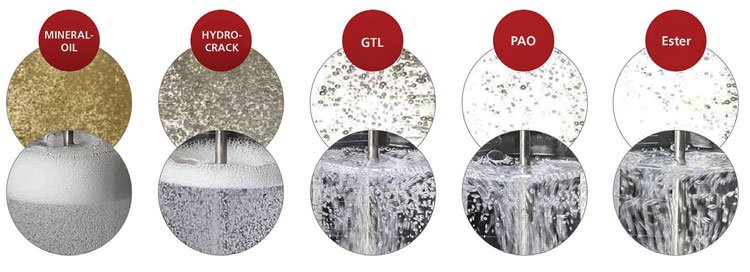
Grinding becomes particularly important where final dimensional accuracy and surface finish determine component performance. In gearbox manufacturing, for instance, gear grinding directly influences transmission noise, efficiency and durability. The source describes GTL-based SintoGrind technology as supporting improved cooling, flushing and grinding stability while helping reduce wheel loading and dressing requirements.
This highlights a broader manufacturing shift: productivity can no longer be evaluated simply by machine speed. Wheel life, cycle time, surface finish, machine cleanliness and maintenance requirements all contribute to the total economics of a machining process.
EDM for Complex Components
Where conventional cutting becomes difficult, Electrical Discharge Machining (EDM) provides another critical manufacturing route. Advanced dielectric fluids can influence material-removal rates, electrode wear, wire life, flushing performance and surface finish.
The source cites IONOPLUS®, IONOVIT® and IONOFIL® dielectric technologies for precision EDM applications, with benefits including improved material removal, reduced electrode wear and extended fluid life.
A particularly notable example comes from Lufthansa Shannon Turbine Technologies, where adoption of IONOPLUS® and IONOVIT® was reported to deliver a 24% productivity increase and 75% reduction in consumable costs, equivalent to the productivity of approximately five to six additional EDM machines across a fleet of 24 machines.
The Next Frontier: Efficient, Sustainable Machining
For heavy engineering and energy-system manufacturers, sustainability increasingly overlaps with productivity. Longer fluid life, reduced consumption, lower maintenance, cleaner machines and improved tool or wheel life can simultaneously reduce operating costs and environmental impact.
As components become larger, materials become harder to machine and tolerances become tighter, the winning strategy will be process optimisation across the entire machining ecosystem.
The future of heavy-engineering machining will therefore not be determined by the machine tool alone. Machine, cutting tool, grinding technology, process fluid, automation and inspection must work as one integrated system.
In an industry where every micron—and every production hour—matters, process-fluid technology is becoming an increasingly important part of the precision-manufacturing equation.