 Every era of manufacturing is shaped by a defining shift. For decades, competitiveness depended on machine capability before automation transformed production. Today, modern factories have access to world-class machines, software, and automation. Yet many still face bottlenecks, process variation, unplanned downtime, and pressure to deliver more with fewer resources. The question is no longer whether manufacturers have advanced technology. The real question is whether every technology within the production line works together as one optimized manufacturing process, because productivity is ultimately shaped by the quality of the entire system.
Manufacturing Performance Is Won at the Interfaces
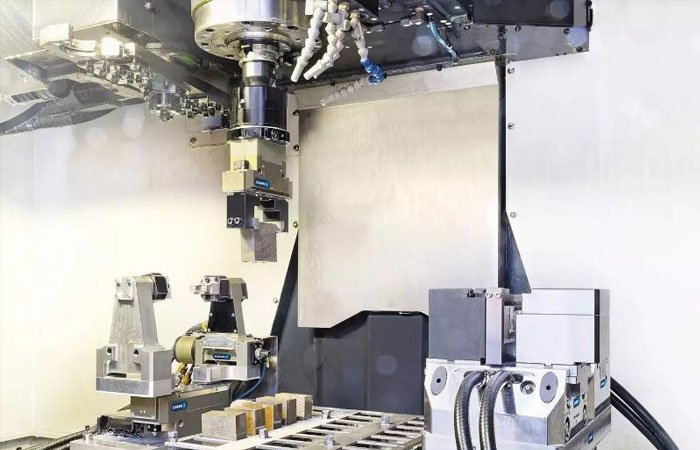
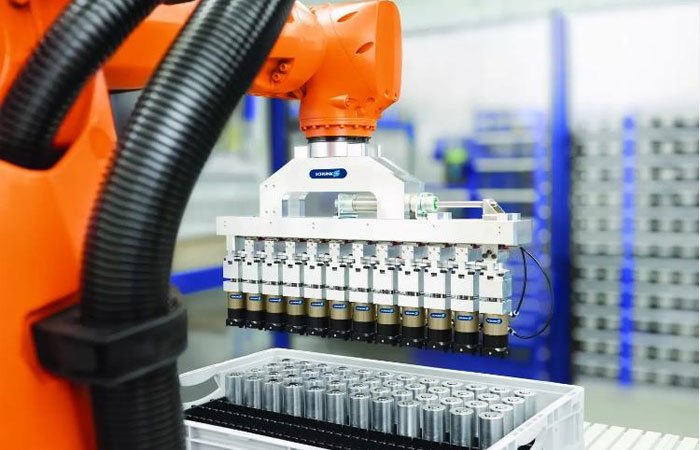
A production line is more than a collection of machines; its performance depends on every interaction between them. A machining centre requires consistent workholding, a robot depends on reliable gripping, and an automated assembly line succeeds when every handling operation is repeatable. When even one interface becomes unstable, cycle times increase, quality varies, and productivity suffers.The greatest opportunity lies not in replacing individual components, but in engineering the interfaces connecting the entire production process. This represents a fundamental shift in manufacturing thinking, moving from “Which product should we choose?” to “How should the process perform?”
When Standard Solutions Reach Their Limits
Standard products remain the foundation of modern manufacturing and efficiently solve thousands of applications. However, manufacturing challenges rarely remain standard. A lightweight aerospace structure may demand distortion-free clamping, while an electric mobility component may require precise gripping without damaging sensitive surfaces. A high-volume machining line may need to eliminate only a few seconds from every cycle to significantly increase annual output. These challenges require engineering
that begins by understanding the application, production environment, and expected performance before determining whether the right answer is a standard solution, modular system, or customized design. In aerospace manufacturing, SCHUNK’s VERO-S Aviation system enables flexible, low-distortion clamping of setup-intensive structural components. In rail infrastructure manufacturing, the MAGNOS rail clamping system provides secure, maintenance-free clamping under demanding conditions. Every manufacturing challenge deserves the most appropriate solution—not necessarily the most complex one.
Engineering Starts with Understanding
One common misconception is that engineering begins by selecting equipment. In reality, it begins by asking better questions to identify where process variation occurs, which interface limits productivity, and what prevents repeatability. Only then does technology selection become meaningful. The objective remains unchanged: design the solution around the manufacturing process— not the product catalogue.
Looking Beyond Individual Components
Manufacturing systems are increasingly interconnected. Mechanical engineering, gripping technology, workholding, toolholding, robotics, sensing, software, and process control no longer operate independently. Every engineering decision influences the next. When these interfaces are designed together, manufacturers achieve greater process stability, repeatability, faster commissioning, reduced
implementation risk, and stronger long-term productivity. Engineering should reduce complexity, not introduce it.
Global Engineering. Local Execution.
Every manufacturing environment is different, which is why proximity matters. Local engineering teams understand production realities, collaborate directly with customers, and respond quickly as requirements evolve. At SCHUNK Intec India, these capabilities are strengthened by decades of global engineering expertise and standardized practices, combining international experience with local responsiveness.
Supporting the Industries Driving India’s Manufacturing Growth
India’s manufacturing ambitions continue to expand across automotive, electric mobility, aerospace, electronics, semiconductor manufacturing, railways, machine tools, medical technology, and heavy engineering. Although each industry presents unique challenges, they share a common objective: improving productivity without compromising precision, flexibility, or quality. Meeting that objective requires engineering that understands applications, anticipates challenges, and delivers predictable performance under real production conditions.
Engineering Is a Long-Term Commitment
Commissioning is not the finish line; it is the beginning of a manufacturing system’s real test. As products evolve and production volumes change, systems must continue delivering consistent performance. Long term engineering support, continuous optimization, and lifecycle planning are just as valuable as the original design. The next competitive advantage will come from engineering every interaction between technologies. The factories that define the next decade will be those that build the most stable, predictable, and intelligently engineered manufacturing processes.