


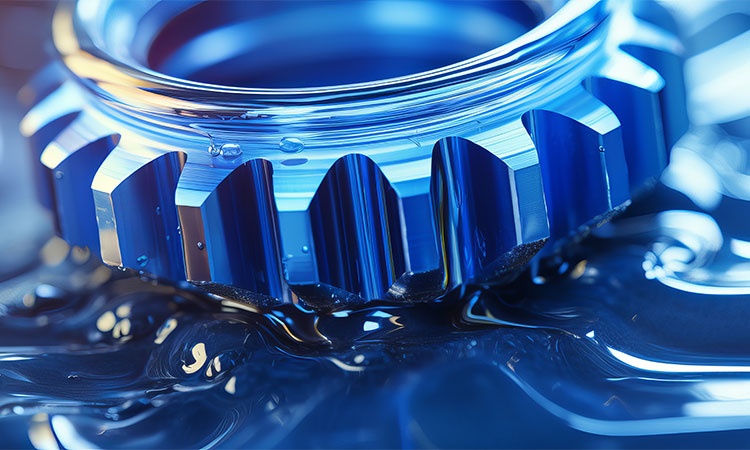
The world of machining is entering a new era. This new era values not just accuracy and productivity, but also sustainability and resource efficiency. As companies work toward becoming carbon neutral and making things in a more environmentally friendly way, coolants and lubricants are becoming more and more important in influencing the future of machining. The focus is moving away from traditional oil-based fluids and toward “high-performance, eco-friendly alternatives” that are safe, cost-effective, and good for the environment without sacrificing cutting performance.
A Change in the Way We Think About Sustainable Fluids
For a long time, traditional metalworking fluids (MWFs) have been necessary for keeping tools cool, lowering friction, and making them last longer. But they also have a big effect on the environment—up to 17% of total machining costs, according to a 2024 study by the International Metal Cutting Research Association (IMCRA). It can cost an extra 5–10% to get rid of and handle spent coolants.
To fight this, more and more manufacturers are using synthetic, semi-synthetic, and bio-based lubricants that cut down on waste and emissions. These high-tech fluids break down naturally, have few volatile organic compounds (VOCs), and work well with modern high-speed machining. According to a MarketsandMarkets analysis, the global metalworking fluids market will be worth USD 13.8 billion by 2030. Bio-based coolants will rise at a CAGR of 6.5%, thanks to rules about sustainability and workplace safety.
The Growth of Minimum Quantity Lubrication (MQL)
The use of Minimum Quantity Lubrication (MQL) is one of the most promising trends in sustainable machining. MQL uses a small aerosol mist of oil, usually less than 50 ml/hour, to supply targeted lubrication instead of flooding the cutting zone with coolant.
The benefits are big:
* Up to 80% less fluid use * 40% longer tool life * 20–30% less energy use because of less frictional resistance
The automotive and aerospace industries are leading the way in this change. For example, BMW’s Regensburg facility said that after switching all of its powertrain machining lines to MQL, it saw a 60% drop in costs connected to coolant. Indian manufacturers, especially those in Pune, Rajkot, and Coimbatore, are also adding MQL to CNC and turning centers to meet green manufacturing norms.
Smart, synthetic, and sustainable next-generation lubricants
High-performance lubricants are changing to satisfy the needs of sophisticated machining, which are very complicated. Nano-additive oils, which contain graphene and boron nitride particles, are improving surface smoothness and heat dissipation on a very small scale. At the same time, ester-based synthetic fluids made from vegetable oils are better at resisting oxidation, breaking down naturally, and holding up than mineral oils.
A 2025 Frost & Sullivan analysis said that synthetic coolants can lower overall machining costs by 15–25% over time because they last longer in the sump, keep machines cleaner, and cut down on downtime. These lubricants also make the health of the workers and the cleanliness of the workplace better, which is an important but often-overlooked part of sustainable production.
Managing Coolant: Turning Waste into a Resource
Sustainability also includes better management of fluids. Modern facilities are using recycling and filtration systems to make coolant last up to five times longer. Closed-loop systems that reclaim 95% of spent fluid are now possible thanks to vacuum distillation, ultrafiltration, and centrifuge separation technology.
For instance, Tata Motors’ Pune plant cut down on coolant disposal by 70% by setting up centralized recycling systems. This saved thousands of liters of oil and water per year. These efforts are in line with India’s larger goal of having net-zero industrial emissions by 2070.
The Future: Digitalization and Sustainability Come Together
Digital monitoring is the next step in fluid technology. IoT sensors are currently used by smart coolant management systems to keep track of pH, concentration, temperature, and bacterial growth in real time. This method of predictive maintenance cuts down on waste, makes sure that performance stays the same, and helps satisfy ISO 14001 environmental management criteria.
Major lubricant companies around the world, such as ExxonMobil, Castrol, and Molygraph, are putting a lot of money into research and development of sustainable fluids. They are making water-free lubricants, vegetable-based coolants, and circular recycling programs that cut down on the carbon footprint of machining by a lot.
Sustainability is becoming a business necessity rather than a choice. Coolants and lubricants are becoming important tools for green machining. Combining MQL, bio-based lubricants, and smart fluid management not only helps the environment, but it also leads to demonstrable increases in productivity.
Processes that “cut cleaner, run longer, and waste less” will define the future of machining. This shows that performance and sustainability may go hand in hand. In the changing world of production, green fluids aren’t just another option; they are the new standard for competitive advantage.