


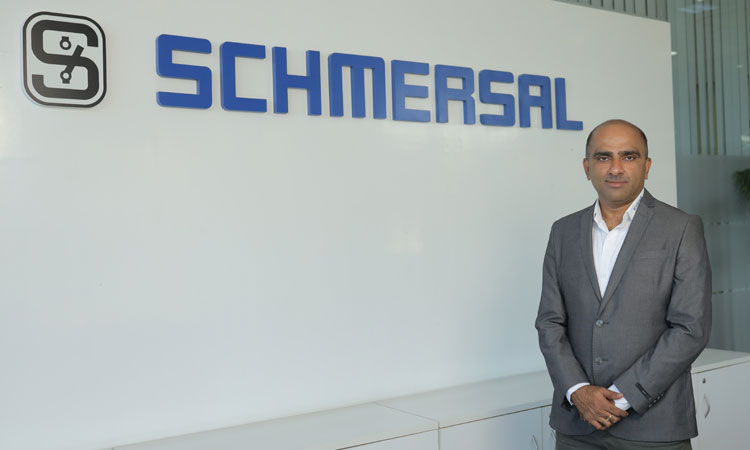
As factories grow smarter, safety systems must evolve faster. Leading this evolution at Schmersal India is a visionary R&D leader, Manoj Babu, Deputy General Manager, R & D, who’s taken the company from basic safety components to smart, connected solutions supporting Industry 4.0. In this feature, he explains how the Pune-based team contributes globally—and why designing for safety is a mission, not a mandate.
Q1. Can you share your journey into the world of industrial safety and automation, and what inspired your focus on R&D at Schmersal?
“I started my career in motion control and automation solutions, which gave me a strong foundation in how machines behave and how systems must be designed for both performance and reliability. This naturally led me into Access control product development, where safety and system integrity became a key focus. That’s when I truly began to see safety not just as a requirement, but as a design philosophy.
Joining Schmersal was a turning point. As the first R&D employee in India, I was tasked with setting up the entire function from scratch. Over time, we expanded from product design to forming an embedded and IoT team that now supports global R&D from Germany to China and Brazil—through the Schmersal Global Competitive Center (SGCC) in Pune.
What inspired my focus on R&D at Schmersal is the responsibility that comes with safety engineering. You’re not just innovating; you’re protecting lives. That mission is what continues to drive me and my team every day.
Q2. What are some of the key innovations or product developments your team in India has contributed to recently, and how are they impacting end-users in the manufacturing and automation sectors?
“Our journey began with elevator safety components like door contacts and microswitches, which helped us establish a strong foundation in product design for global standards. We then expanded into rugged solutions like pull cord switches for conveyor systems in heavy industries such as cement and iron.
A major step forward was developing Hall sensor-based foot switches for European clients, which marked our entry into intelligent electronics. Today, our focus is on smart safety solutions that support Industry 4.0—helping users improve diagnostics, ensure safety, and reduce machine downtime.”
Q3. How does the R&D function at Schmersal India integrate with global innovation centers, and what unique strengths does the India team bring to the table?
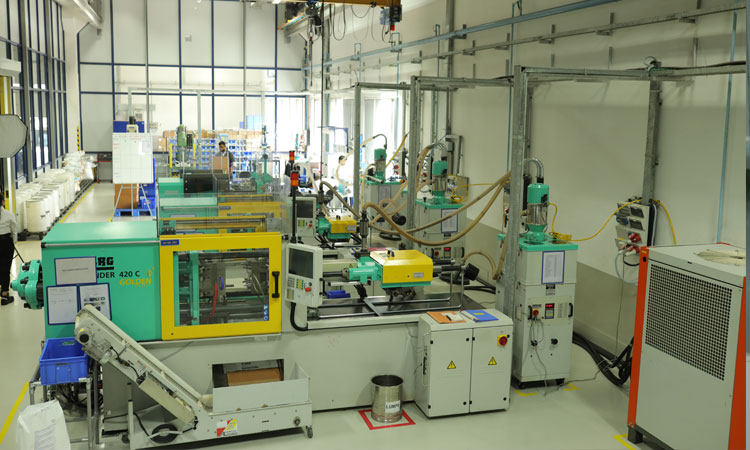
“Schmersal India’s R&D started by developing products for local needs, but over time we’ve expanded to serve global customers. Today, our team actively supports product development across Germany, China, and Brazil, with increasing focus on electronics, embedded systems, and IoT.
What sets us apart is our agility and ability to deliver cost-effective, high-quality solutions. The India team brings a strong blend of application know-how and engineering depth, making us a trusted partner in Schmersal’s global innovation ecosystem.”
Q4. Given the rapid evolution of smart factories, how is your team addressing the growing need for intelligent safety systems in Industry 4.0 environments?
“Smart factories demand more than just conventional safety they require intelligent systems that can communicate, adapt, and self-diagnose. At Schmersal India, we’re actively transitioning from pure electromechanical design to developing embedded and IoT-enabled safety solutions that fit into Industry 4.0 ecosystems.
Our team is working on products that integrate sensor data, diagnostics, and communication protocols like IO-Link and Ethernet-based systems. The goal is to provide real-time visibility of safety status, predictive maintenance alerts, and seamless integration with machine controls.
We’re not just adding electronics to safety devices we’re rethinking how safety can enhance productivity and machine availability in smart manufacturing environments.”
Q5. What challenges do you face in aligning regulatory compliance, user expectations, and technological advancement when developing new safety solutions?
“Schmersal has always designed products to meet international safety standards, so aligning with Indian regulatory requirements has been quite seamless. With increasing focus on man-machine safety in India, we’ve been well-prepared both technically and culturally.
Thanks to our proactive approach, we were among the first to obtain BIS certification for safety products developed and manufactured in India. The key challenge is balancing evolving compliance needs with user expectations for cost, simplicity, and smart features without compromising on safety.”
Q6. Finally, what advice would you offer to young engineers aspiring to work in industrial automation R&D, especially in the field of functional safety and machine protection?
“Functional safety and machine protection is a specialized and demanding field where systems must be fail-safe by design across electromechanical components, hardware, and software. My advice to young engineers is to develop a strong foundation in industrial automation and truly understand how machines behave in real-world environments. Practical exposure is key.
With India prioritizing safety across sectors, this field offers tremendous scope. But it also demands continuous learning through regular training and certifications to stay aligned with evolving functional safety standards. Ultimately, safety isn’t something that can be added later it must be designed in, right from the beginning, across every layer of the system.”