


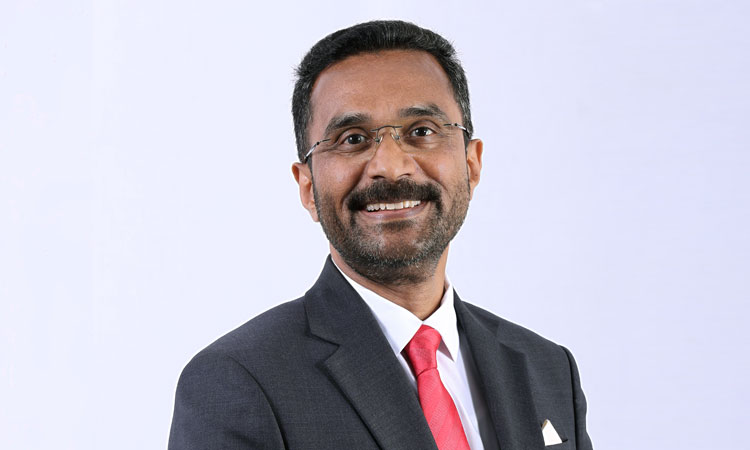
As India accelerates its journey toward Industry 4.0, the synergy between hardware and software solutions has become a game-changer for manufacturers. In this exclusive interview, the Mathew Jacob, Vice President – Sales and Marketing of Rittal India discusses how the combined strengths of Rittal and EPLAN are enabling Indian industries to streamline engineering, enhance productivity, and embrace digital manufacturing with confidence. From their latest infrastructure investments and regional outreach to their commitment to quality and ecosystem partnerships, this conversation offers valuable insights into how Rittal India is shaping the future of smart manufacturing across key sectors.
Q1: RITTAL is globally recognized for driving industrial efficiency and digital transformation. Could you share how Rittal and EPLAN, both companies, complement each other and the key strengths of this combined offering for Indian manufacturers?
It gives me immense pleasure in discussing the incredible synergy between Rittal and EPLAN offers. We are global leaders dedicated to industrial efficiency and digital transformation. Our combined offering delivers a complete, integrated value chain that’s particularly powerful for Indian manufacturers navigating Industry 4.0 deployment. Rittal provides the robust physical backbone—world-class enclosures, climate control, power distribution, and IT infrastructure. EPLAN on the other hand offers cutting-edge software for electrical engineering, automation, and mechatronics design. The magic happens in the seamless data flow linking software to the hardware. EPLAN’s intelligent software creates a “digital twin” of a control panel, enabling precise planning and automated production data. This data then integrates seamlessly with Rittal’s automation manufacturing systems like Perforex, Wire terminal machine etc . For Indian manufacturers, this translates into significantly reduced engineering time, minimized errors, faster time-to-market, and optimized production costs, driving enhanced productivity and quality.
Q2: What are the main industries and application areas in India where RITTAL’s enclosures and EPLAN’s engineering software have created measurable improvements in productivity and project delivery?
We’ve seen demonstrably improved productivity and accelerated project delivery across several key Indian industries. Machinery and plant construction is a prime example. Here, EPLAN Electric P8 and Pro Panel enable rapid electrical design and virtual prototyping, which then feeds into Rittal’s automation like the Perforex. This significantly cuts design time and assembly errors, speeding up machine commissioning. Panel building and switchgear manufacturing is another sweet spot. Customers report cutting project delivery timelines by 30-50% through optimized panel layout and wiring. Finally, the energy and power solutions sector, including renewables, sees immense benefit. Our integrated solutions ensure reliable and efficient systems, crucial for India’s rapidly expanding energy infrastructure where speed and reliability are paramount.
Q3: RITTAL and EPLAN are known for their engineering precision and process innovation. What quality policies and production systems are in place to ensure consistent, global-standard excellence?
Our commitment to global-standard excellence is deeply ingrained in our manufacturing and service deliverables. Rittal adheres to comprehensive quality management, evidenced by international certifications (IEC, UL, VDE, etc.) and rigorous in-house quality laboratories. Every product undergoes extensive testing—up to 20 tests for an enclosure—for aspects like ingress protection, corrosion and thermal stability. Our advanced surface protection, like RiNano, ensures superior durability. We employ a ‘zero-error’ philosophy with preventive quality planning and continuous improvement across the value chain, coupled with strong supplier collaboration and full traceability.
EPLAN’s quality is built into its software. It supports adherence to global standards like IEC 81346 and ANSI, ensuring designs are globally compliant. The data consistency of the EPLAN Platform enables accurate ‘digital twins,’ minimizing manual errors. Integrated quality assurance during software development, combined with intelligent design automation, actively prevents errors early on. Our EPLAN Certified Engineer programs also ensure that users maximize the software’s potential. Both companies emphasize continuous improvement based on customer feedback, ensuring our solutions remain cutting-edge and reliable.
Q4: Could you share recent developments in terms of infrastructure expansion, technology investments, or regional outreach initiatives in India from the point of Rittal?
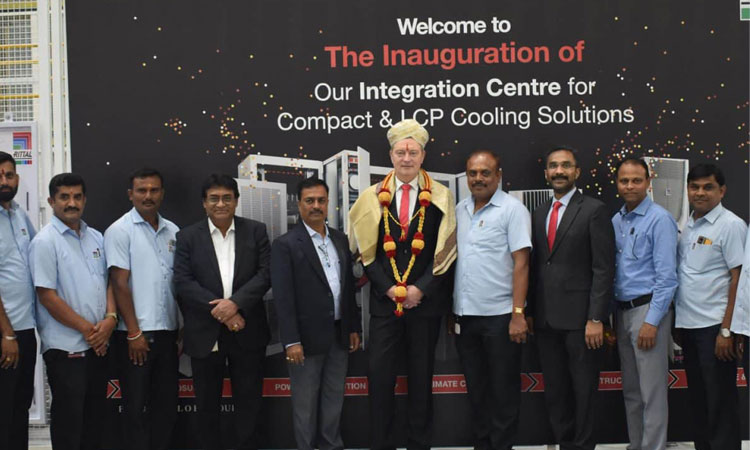
Our commitment to the Indian market is unwavering, marked by significant recent developments. A key highlight is our new, state-of-the-art Integration Centre in Bangalore, inaugurated in March 2024. This facility boosts our capacity for ‘Make in India’ industrial cooling units and Liquid Cooling Packages (LCPs) for IT infrastructure—it’s Rittal’s third global site for these products, underscoring India’s strategic importance. This allows us to meet surging demands for energy-efficient cooling both locally and in emerging markets.
To enhance customer proximity, we also inaugurated a new sales office in Bangalore (Hebbal) in July 2024, improving local support and engagement as part of our ‘Faster – Better – Everywhere’ motto.
Technologically, our investments are heavily geared towards energy efficiency and sustainability, particularly with our Blue e+ and LCP solutions. We’re also expanding our modular data center solutions, including edge data centres, crucial for India’s digital transformation. Furthermore, we continue to integrate IIoT innovations for remote monitoring and predictive maintenance, driving operational efficiency for our customers.
Our regional outreach involves strengthening our channel partner network across India, ensuring our solutions reach Tier 2 and Tier 3 cities. We maintain a strong customer-centric approach through localized support teams and training, actively contributing to India’s major infrastructure projects like railways and smart cities.
Q5: Looking ahead, what is the joint roadmap for RITTAL and EPLAN in India—both in terms of product innovation and ecosystem partnerships that align with the future of digital manufacturing?
Looking ahead, our joint roadmap for Rittal and EPLAN in India is squarely focused on accelerating digital manufacturing, aligned with Industry 4.0.
In product innovation, we’re intensifying efforts on end-to-end digital continuity. This means further refining the “digital twin” concept, where EPLAN’s intelligent designs seamlessly translate into Rittal’s automated production. Expect advancements in AI-driven engineering within EPLAN, automating complex design tasks and optimizing panel layouts. Rittal will focus on expanding modular, scalable, and sustainable solutions, particularly for industrial IT and edge computing, along with integrating more IIoT capabilities for intelligent climate control and predictive maintenance.
For ecosystem partnerships, we aim to build a robust support network. This includes deepening strategic alliances with automation solution providers, ERP/PLM vendors, and system integrators to ensure seamless data exchange across the entire manufacturing process. Crucially, we’re committed to academic and research collaborations to foster talent and co-create India-specific solutions. Empowering our channel partner network remains vital, ensuring our advanced, integrated solutions reach manufacturers nationwide, enabling them to confidently embrace digital manufacturing and enhance their global competitiveness.