


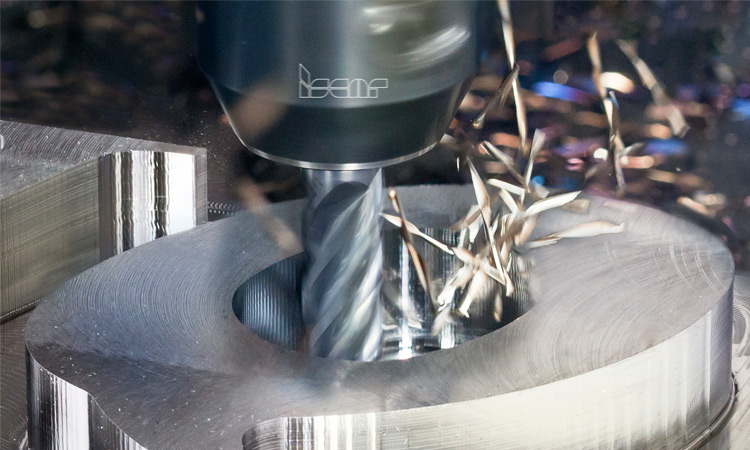
In the late 1990s, a quiet revolution began in metalworking — and solid carbide endmills (SCEM) were at the heart of it. Once niche, they quickly became a mainstay thanks to their unmatched precision, ability to handle small-diameter designs, and perfectly balanced structures. Against high-speed steel (HSS), carbide was a clear winner: tougher, sharper for longer, and capable of withstanding punishing wear.
But their rise wasn’t just about being better than the competition. The growth of CNC machining and the push for high-speed milling (HSM) demanded tools that could keep pace — and SCEM were built for speed. At the same time, advancements in tool grinding CNC machines and CAD/CAM systems were game changers. They allowed for complex geometries, virtual grinding simulations, faster production, and pinpoint accuracy, making high-quality SCEM more affordable and widely available.
Material science played its part too. Submicron carbide substrates paired with advanced coatings like TiAlN transformed durability and heat resistance, unlocking the ability to cut harder materials at higher speeds. Today, SCEM account for around half of the global milling cutter market — and their share is still climbing.
The Shape of Things to Come
SCEM development is being shaped by several powerful trends:
- Submicron carbide grades and next-gen coatings (TiAlN, AlTiN, diamond)
- Intelligent designs with variable helix, unequal pitch, and chip-splitting edges
- High-speed and high-feed milling optimization
- Extreme precision for tight tolerances at high RPM
- Tailor-made tools for specific materials and industries
- Multifunctionality — milling, drilling, chamfering in one tool
- Industry 4.0-ready digital companions with CAD data, tool life estimates, and more
ISCAR’s Cutting-Edge Response
While two SCEM may look the same, performance differences can be worlds apart — something ISCAR has mastered with purpose-driven designs.
For titanium alloys, the Ti-TURBO family offers tools built for toughness: four-flute cutters for deep slotting, and seven- or eight-flute versions for high-speed trochoidal milling. Variable pitch and helix angles enhance rigidity and suppress chatter, even in notoriously stubborn Ti-5-5-5-3.
Miniature EC-A2-T endmills (0.3–4mm) excel in hardened steel up to HRC 65 thanks to IC602 submicron carbide and AlTiSiN coating. For aluminum and non-ferrous work, IC1508 carbide with DLC coating delivers clean, fast results.
The multifunctional ECD-S2 range handles spot drilling and chamfer milling in 30°, 45°, and 60° versions — a shop-floor staple. High-feed machining is powered by the SOLID-FEED-MILL line, minimizing radial forces for stable performance. And in 5-axis work, NEOBARREL oval-shaped tools shine on complex 3D surfaces.
Digital by Design
ISCAR’s ISO 13399-compliant digital toolkit offers 3D/2D models, STEP files, and advanced e-catalog search to match SCEM to exact requirements — by material, grade, flutes, or geometry.
The Bottom Line
By blending advanced materials, innovative geometries, and digital integration, ISCAR continues to set the standard for SCEM. In a world where every micron matters, they remain a solid ally for manufacturers chasing precision, speed, and reliability.