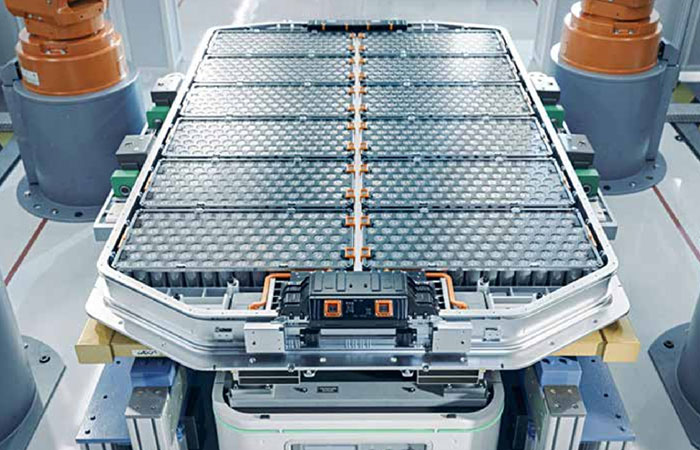
As the global transition toward electrification accelerates, Battery Energy Storage Systems (BESS) are emerging as a critical enabler—not only for renewable energy integration but also for the evolving electric vehicle (EV) ecosystem. From stabilizing power supply for energy-intensive machining operations to enabling circular battery economies, BESS is redefining how manufacturers approach productivity, sustainability, and cost efficiency.
The Rise Of Bess In The EV Ecosystem
The rapid growth of the EV industry is directly fueling the expansion of battery energy storage systems. Global EV sales continue to surge, with over 20 million units expected annually, making EVs the dominant driver of battery demand worldwide.
Today, EVs account for more than 70% of global lithium-ion battery consumption, while stationary energy storage systems represent a fast-growing secondary segment. This dual demand is creating a powerful synergy—where advancements in EV batteries directly benefit energy storage technologies and vice versa.
For machining-intensive EV manufacturing—such as precision components, die-mould tooling, and battery casing production—reliable and uninterrupted power has become non-negotiable. BESS is stepping in as a strategic solution to ensure energy continuity, peak load management, and reduced dependency on unstable grids.
Technology Evolution Driving Performance
Advanced Battery Chemistries
While lithium-ion batteries remain dominant, new chemistries are gaining traction:
- Lithium Iron Phosphate (LFP): Safer and cost-effective, ideal for stationary storage
- Sodium-ion batteries: Emerging as a low-cost alternative for grid applications
- Solid-state batteries: Promising higher energy density and improved safety
These innovations are expected to reshape both EV and energy storage markets in the coming years.
AI-Enabled Battery Management Systems
Modern BESS solutions are increasingly integrated with AI-driven Battery Management Systems (BMS) that optimize charging cycles, predict failures, and enhance lifespan—critical for industrial reliability.
Second-Life Battery Utilization
A transformative trend is the reuse of EV batteries for stationary storage. Even after automotive life, batteries retain up to 70–80% capacity, making them ideal for energy storage applications.
Recent industry developments show automakers deploying recycled EV batteries to power manufacturing facilities, significantly reducing energy costs and carbon footprint.
Key Market Trends Shaping Bess
- Exponential Market Growth The global BESS market is witnessing remarkable expansion, projected to grow at over 20% CAGR through the next decade.Driven by renewable energy adoption and EV proliferation, energy storage is transitioning from an optional investment to a core infrastructure component.
- Falling Battery Costs Battery storage costs have dropped significantly, with prices reaching nearly $70/kWh in 2025—one of the steepest declines in recent years.This cost reduction is making BESS commercially viable for industrial users, including machining clusters and EV component manufacturers.
- Hybrid Energy Systems
A major trend is the integration of solar, wind, and storage into unified energy ecosystems. Instead of standalone installations, industries are adopting hybrid models that combine renewable generation with storage for round-the-clock power availability.- Revenue Stacking Models
Energy storage is no longer limited to backup applications. Companies are leveraging BESS for multiple revenue streams—peak shaving, frequency regulation, and grid services—maximizing ROI.- Microgrids & Decentralization
The rise of microgrids is enabling localized energy independence, particularly in industrial zones.
These systems ensure uninterrupted machining operations even during grid outages, improving productivity and reducing downtime.
India: A High-Growth Bess Market
India is rapidly emerging as a key player in battery energy storage adoption, driven by ambitious renewable energy targets and EV policies.
Government initiatives such as the National Energy Storage Mission and Production-Linked Incentive (PLI) schemes are encouraging domestic manufacturing and deployment.
Grid planners estimate a requirement of at least 17 GWh of battery storage capacity in the near term, highlighting the scale of opportunity.
States like Gujarat and Andhra Pradesh are already investing heavily in large-scale BESS projects to stabilize renewable power and support industrial growth.
For India’s machining sector—particularly MSMEs—BESS offers a pathway to:
- Reduce energy costs through peak load optimization
- Ensure consistent machine tool performance
- Improve competitiveness in global EV supply chains
Impact On EV Machining & Manufacturing
Battery energy storage is becoming increasingly relevant to machining operations in the EV value chain:
- Energy Reliability for Precision Manufacturing
High-precision machining processes demand uninterrupted power. Voltage fluctuations can lead to tool wear, dimensional inaccuracies, and rejection losses. BESS ensures stable power quality. - Cost OptimizationEnergy constitutes a significant portion of machining costs. With BESS, manufacturers can store cheaper off-peak electricity and use it during high-tariff periods, reducing operational expenditure.
- Sustainability & ESG Compliance Global OEMs are demanding greener supply chains. Integrating renewable energy with storage helps machining companies meet carbon reduction targets and enhance ESG credentials.
- Support for EV Component ManufacturingFrom battery housings to drivetrain components, EV manufacturing requires energy-intensive processes. BESS ensures scalability without overloading grid infrastructure.
Future Outlook: Convergence of Mobility & Energy
The future of BESS lies in the convergence of mobility, manufacturing, and energy systems:
- Vehicle-to-Grid (V2G): EVs themselves becoming mobile energy storage units
- Factory Energy Independence: Smart factories powered by integrated storage systems
- Circular Battery Economy: Recycling and reuse becoming mainstream
Global energy storage capacity is expected to grow at record rates, with annual installations rising by over 20% year-on-year. Simultaneously, the BESS market is projected to exceed $24 billion by 2030, signaling strong long-term growth.
Battery Energy Storage Systems are no longer just an energy solution—they are a strategic enabler for the EV manufacturing ecosystem. As machining industries evolve to meet the demands of electric mobility, BESS will play a pivotal role in ensuring energy reliability, cost efficiency, and sustainability.
For India’s rapidly growing EV machining sector, the adoption of BESS is not just an opportunity—it is becoming a necessity. Companies that integrate energy storage into their operations today will be better positioned to lead in the electrified, energy-conscious industrial landscape of tomorrow.