 Advanced materials such as titanium, nickel-based superalloys, and heat-resistant alloys are reshaping aerospace, defence, and medical manufacturing. While these materials deliver unmatched performance, they also present some of the industry’s toughest machining challenges. Success today is no longer determined by machine tools alone—it requires a synchronized approach that integrates cutting tools, machining strategies, metalworking fluids, automation, and digital process management.
In this exclusive interview with The Machining World Express, Mr. Punit Gupta, Managing Director, Blaser Swisslube India, shares his insights on machining next-generation materials, the evolving role of metalworking fluids as a productivity enabler, optimizing Total Cost of Ownership, and how data-driven coolant management is supporting the future of automated manufacturing. He also explains why manufacturers must rethink conventional machining practices to remain globally competitive.
Advanced materials such as titanium, nickel-based superalloys and heat-resistant alloys have long been critical across aerospace, defence and medical manufacturing. From your perspective, what makes these materials so challenging to machine, and how should manufacturers rethink their machining strategy?
Advanced materials are enabling the next generation of aircraft, defence systems, and medical devices because they deliver exceptional strength-to-weight ratios, corrosion resistance, and performance under extreme operating conditions. However, the very properties that make them indispensable also make them exceptionally difficult to machine.
Take titanium as an example. Its low thermal conductivity concentrates heat at the cutting edge rather than dissipating it through the workpiece, leading to rapid tool wear, high cutting temperatures, and process instability. Nickel-based superalloys present similar challenges due to their high strength and ability to retain mechanical properties even at elevated temperatures. The result is shorter tool life, inconsistent surface integrity, and higher manufacturing costs if the process is not properly optimized.
In our experience, the biggest misconception is that these challenges can be solved by investing in a better machine or a premium cutting tool alone. Advanced-material machining demands a holistic approach where machine capability, tooling, machining strategy, cutting parameters, and metalworking fluid technology work together as one integrated system.
Manufacturers that adopt this systems approach consistently achieve better process stability, longer tool life, and higher productivity. Ultimately, success in machining advanced materials is not about overcoming the properties of the material—it is about engineering the entire machining process to work in harmony with them.
Many manufacturers invest heavily in machines and cutting tools when machining advanced materials. In your experience, what role does metalworking fluid play in improving tool life, surface integrity and process reliability?
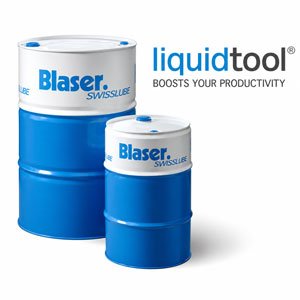 When manufacturers invest in advanced machine tools and premium cutting tools, they often expect these alone to deliver higher productivity. However, the actual machining performance is determined at the cutting zone, where heat, friction, pressure, and chip formation interact continuously. This is precisely where metalworking fluid becomes a critical engineering technology rather than just a consumable.
A high-performance metalworking fluid must do far more than cool. It must provide effective lubrication under extreme pressures, dissipate heat efficiently, support chip evacuation, and maintain process stability throughout long machining cycles. These factors directly influence tool life, surface integrity, dimensional consistency, and ultimately the reliability of the entire machining process.
At Blaser, we describe this philosophy as Liquid Tool®. We believe that metalworking fluid should be treated as an active productivity enabler, working in harmony with the machine, cutting tool, and machining strategy. When the entire system is optimized, manufacturers can achieve longer tool life, improved component quality, higher machine uptime, and more predictable, repeatable production—outcomes that are essential when machining high-value aerospace materials.
High-value materials also mean high-value mistakes. How can manufacturers optimize Total Cost of Ownership when machining titanium and nickel alloys, rather than focusing only on the purchase price of consumables?
The concept of Total Cost of Ownership (TCO) has existed for decades, yet many manufacturers still evaluate metalworking fluids primarily on purchase price. In high-value machining, that approach can create significant cost blind spots. The cost of a metalworking fluid typically represents only a small fraction of the total machining cost, while tooling, machine downtime, scrap, rework, and lost productivity have a far greater impact on overall profitability.
This becomes even more critical when machining titanium and nickel-based superalloys, where a single scrapped component or an hour of unplanned machine downtime can cost substantially more than the fluid consumed over an extended production period. The real question, therefore, is not “What does the fluid cost?” but “What value does it create across the entire machining process?”
At Blaser, this philosophy is embodied in our Liquid Tool® approach. By improving lubrication, thermal management, process stability, and tool life, we help manufacturers reduce hidden manufacturing costs while increasing machine utilization and component quality. Ultimately, the most economical solution is rarely the cheapest consumable—it is the one that delivers the lowest Total Cost of Ownership and the highest overall productivity.
As aerospace manufacturing embraces automation and digital manufacturing, how is data-driven coolant management helping manufacturers improve process stability and reduce unplanned downtime?
As manufacturers move toward automation and lights-out machining, process consistency becomes just as important as machining capability. While machine tools, cutting tools, and production systems have become increasingly connected, metalworking fluid management has traditionally remained a manual process. This creates variability that can affect tool life, surface quality, and ultimately machine uptime.
Data-driven coolant management changes that paradigm. By continuously monitoring key parameters such as concentration, temperature, fluid level, and system health, manufacturers can detect deviations before they impact production. Instead of reacting to problems after they occur, they can take preventive action, ensuring consistent machining conditions throughout the production cycle.
At Blaser, we combine our Liquid Tool® philosophy with digital solutions such as Liquidtool Manager to bring greater transparency and control to coolant management. Real-time monitoring, data-driven optimization, and remote technical support enable manufacturers to maintain stable machining conditions, reduce unplanned downtime, and improve process reliability. As aerospace manufacturing continues to automate, we believe the future will not only be defined by smarter machines, but also by smarter process management—where every element of the machining ecosystem is monitored, optimized, and connected.
As we conclude, what do you believe ultimately defines excellence in machining advanced materials, and what message would you like to leave with manufacturers striving to compete globally?
Excellence in machining advanced materials is not defined by the ability to machine titanium or nickel alloys—it is defined by the ability to do so consistently, predictably, and profitably. In aerospace and defence manufacturing, where every component is mission-critical, success comes from building a stable process that delivers repeatable quality, longer tool life, and maximum productivity over thousands of parts.
The manufacturers who will lead globally are those who move beyond optimizing individual products and instead optimize the entire machining ecosystem. Machines, cutting tools, machining strategies, metalworking fluids, and digital process management must work together as one integrated system. That is where sustainable competitive advantage is created.
At Blaser, this philosophy has guided us for nearly 90 years. We have always believed that our role extends beyond supplying a metalworking fluid—we strive to be a technology and productivity partner, helping customers unlock the full potential of their machining processes.
My message to manufacturers is simple: Invest in process excellence, measure success through Total Cost of Ownership, and never stop challenging conventional thinking. In the end, the most successful manufacturers are those who continuously optimize, innovate, and learn.