
In today’s high-pressure manufacturing environment, the die and mould industry stands as one of the most demanding sectors. Precision is non-negotiable, and productivity is directly tied to profitability. Complex geometries, tight tolerances, and superior surface finish requirements push machining capabilities to their limits. In this evolving landscape, GUSTI Tool Works LLP (GTW), led by Chief Operating Officer Karaan H. Boradhara, is redefining how tooling contributes to manufacturing success—shifting the narrative from products to performance-driven solutions.
Understanding The Machining Challenge
Die and mould manufacturing is fundamentally different from standard machining operations. The industry routinely deals with hardened materials up to 62 HRC, intricate 3D contours, and ultra-fine surface finish requirements of Ra < 0.4 µm. These challenges demand tools that deliver not just accuracy, but also consistency under extreme conditions. Boradhara emphasizes that in such an environment, tooling must function as a “performance promise,” influencing the entire production cycle from roughing to finishing.
Application-First Engineering Approach
GTW’s strength lies in its application-first philosophy. Instead of offering standard tooling, the company engineers each solution based on the specific machining environment. This includes analyzing the workpiece material, machine tool behavior, cutting dynamics, and chip evacuation patterns. The result is a tooling solution that maximizes Metal Removal Rates (MRR) while maintaining dimensional integrity and surface quality. This approach ensures that every tool is not just compatible—but optimized—for its intended application.
Specialized Tooling For Complex Needs
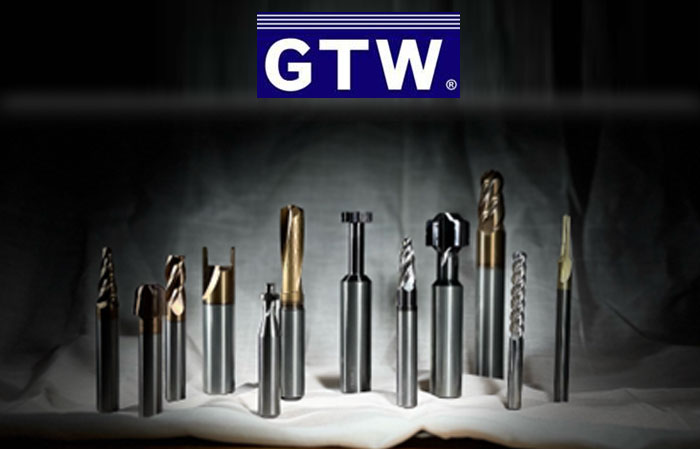
GTW’s product portfolio reflects its commitment to precision and performance. Its high-performance end mills feature variable helix and pitch geometries that effectively reduce vibration, especially in hardened materials. Ball nose cutters are engineered for superior surface finishes, significantly minimizing the need for manual polishing. Additionally, GTW’s micro tools— starting from diameters as small as 0.3 mm— offer high rigidity and precision for machining fine features and micro-cavities. Each tool is designed to address specific challenges faced by die and mould manufacturers.
Redefining Value: Cost Per Component
A key differentiator in GTW’s strategy is its focus on “cost of ownership” rather than tool price. Boradhara advocates a results-oriented mindset, where longer tool life, reduced cycle times, and consistent performance translate into better returns on investment. This shift helps manufacturers optimize their machining economics, ensuring that tooling decisions contribute directly to profitability rather than just upfront savings.
Technology-Driven Future: Digital Twins & Simulation
GTW is actively integrating advanced technologies into its operations. The use of digital twins and simulation-driven tool design allows the company to validate tool performance before actual machining begins. This “first-time-right” approach minimizes trial runs, reduces machine downtime, and accelerates production readiness. By combining engineering expertise with digital innovation, GTW is enabling manufacturers to stay agile and competitive.
Beyond Tools: A True Machining Partner
What truly sets GTW apart is its system- thinking approach. The company extends its role beyond supplying tools by offering application engineering support, parameter optimization, and tool-path strategy recommendations. This collaborative engagement transforms the traditional vendor-client relationship into a long-term technical partnership focused on continuous improvement and shop-floor excellence.
Engineering The Future Of Precision
As the die and mould industry continues to demand higher precision, faster turnaround, and greater efficiency, the importance of advanced tooling becomes even more critical. With a clear vision driven by
Karaan H. Boradhara, GTW is leading this transformation by delivering solutions that are powerful, productive, and purpose-built. By enabling manufacturers to cut smarter, faster, and more efficiently, GTW is not just supporting the industry—it is actively shaping its future.