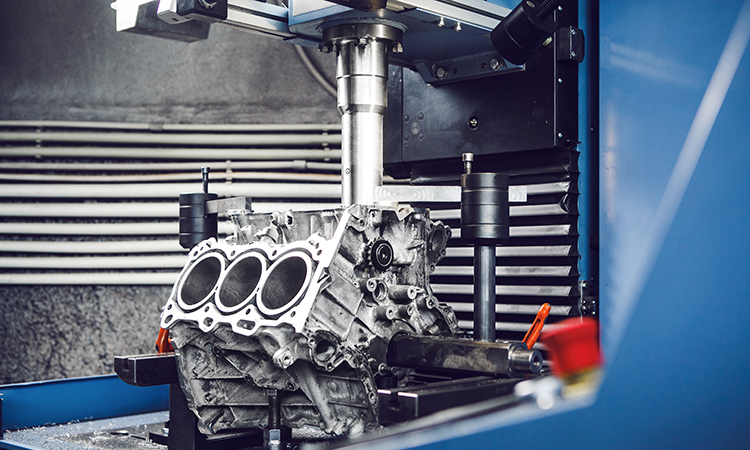
India’s goal of becoming a global manufacturing powerhouse is closely tied to how well its auto industry does. The Indian automotive sector is a key part of the country’s economic growth. It is the third largest automobile market in the world and a major supplier of auto parts. It also makes a big contribution to the country’s manufacturing GDP. Automotive machining is at the heart of this huge business, which is often hidden yet has a huge impact. This important step, which involves carefully shaping and finishing metals and other materials to make engine blocks, transmission parts, chassis parts, and more with very tight tolerances, is what makes every car that comes off the assembly line high-quality, reliable, and high-performing.
Automotive machining in India is changing very quickly and in a big way right now. The industry is moving away from old methods because of strict worldwide quality standards, the shift to Electric Vehicles (EVs), and the concepts of Industry 4.0. It is using cutting-edge technologies, encouraging unmatched accuracy, and bringing together smart solutions to boost India’s industrial momentum on the world stage. This in-depth look at the trends, technologies, and huge changes that are making automotive machining a crucial driver of India’s industrial future.
The Important Role of Accuracy in Manufacturing Momentum
The car industry’s success depends on how precise its parts are. In contrast to other industries, even a tiny change in a vital item like a crankshaft, gearbox housing, or brake rotor can make a car less safe, less fuel-efficient, and less long-lasting. The pressure for Internal Combustion Engine (ICE) vehicles to be more efficient and the strict, specialized needs of the growing EV market have made the necessity for perfect machining even greater.
Moving from ICE to EV Machining
The machining business is going through a big transformation since more people throughout the world and in the US are switching to electric vehicles. The electric powertrain has a simpler structure than an ICE engine block, but it also comes with additional, equally difficult problems:
Battery and Motor Parts: To make electric vehicles, you need to machine battery cases, motor housings, and complex parts for advanced thermal management systems in large quantities and with great accuracy. These generally use lightweight materials like certain aluminum alloys, which need unique tools and machining methods to keep the structure strong and accurate while getting the most range out of the battery.
Near-Net-Shape Production: The focus is moving to technologies like tooth profile precision forging, which make parts that are very close to the final shape needed (near-net-shape). This cuts down on the need for a lot of downstream machining, which saves money, energy, and time—an important part of making EVs competitive in the mass market.
This change requires a lot of money to be spent on new machines that can handle new materials and complicated shapes. What could be a disruptive problem is now a great chance to leapfrog technology.
The Technology Tsunami: Getting on Board with Industry 4.0
India’s automotive machining industry is really speeding up because it is quickly adopting Industry 4.0 technologies. Smart factories are no longer just a dream for the future; they are quickly becoming the norm for auto parts makers who want to compete on a global scale.
The Growth of CNC and Multi-Axis Machining
The development of Computer Numerical Control (CNC) machinery is what makes current car machining possible. More and more Indian companies are putting money into:
High-Speed, Multi-Axis CNC Machining Centers: Machines with five or more axes are the most flexible and accurate. They can make complicated parts in one setup, which cuts down on mistakes, handling time, and cycle time as a whole. This skill is necessary for making complicated parts for modern cars, like turbocharger housings and sophisticated axle parts.
Horizontal and Vertical Machining: The smart use of both Horizontal and Vertical Machining Centers (HMCs and VMCs) makes production lines work better. HMCs are better for making parts that are heavy and come in large quantities. VMCs, on the other hand, can make a lot of different types of parts, which increases throughput.
Digital Integration: AI, IoT, and Automation
Digital technology are changing how efficiently businesses run, in addition to the main machine tools:
Predictive Maintenance and the Internet of Things (IoT): Sensors on machine tools, cutters, and fixtures send real-time operational data. IoT solutions analyze this data to provide predictive maintenance, which predicts when a machine will break down before it happens. This prevents unnecessary downtime and saves millions in lost productivity.
Robotics and Automation: Robotics is no longer just for welding lines. Automated loading, unloading, tool changing, and part inspection that work with machining centers make sure that production goes on all the time with very little help from people. This level of consistency is very important for keeping the high quality needed for exporting.
Artificial Intelligence (AI) and Machine Learning (ML): AI algorithms are now being used to optimize machining parameters (feed rates, spindle speeds, coolant flow) in real time. This makes the cycle times shorter, the tool life longer, and the surface finish better, all without lowering the quality of the final part.
Trends and Opportunities: India’s Global Advantage
India’s strong auto parts sector, which is expected to grow to a large market size in the next several years, is proof of its improving machining skills. India is in a good position to become a global sourcing hub because of a number of trends in the country and throughout the world:
Government Programs and an Export Focus
The Production Linked Incentive (PLI) Scheme and other government programs are meant to boost high-value manufacturing by encouraging deep localization and big investments in new technology. This governmental support is directly driving the purchase of high-precision machining tools.
Global Sourcing Shift: Changes in geopolitics and the demand for a more diverse supply chain are speeding up the “China Plus One” strategy among global OEMs. India is becoming a popular choice for obtaining high-quality, precision-machined auto parts for global vehicle platforms because of its low costs, big pool of skilled workers, and better technology.
The Need for Skilled Workers
The move to smart manufacturing is both a challenge and an opportunity for workers. There is now an urgent need for CNC programmers, automation specialists, and data analysts who can manage complex, integrated production systems instead of operators who are adept at running older manual machines. Skill development programs, which are commonly run by both businesses and schools, are very important to make sure that the workforce is ready for the future and can make the most of the new capital investments.
Machining India’s Rise
Automotive machining is more than simply a way to make things; it’s a key part of India’s plan to become an industrial power. The sector is turning its technological success into national economic growth by embracing the digital transformation that Industry 4.0 offers, adjusting to the strict requirements of the EV future, and constantly raising the bar for quality and precision. The quiet hum of high-speed spindles and the precise rhythm of CNC centers are, quite literally, shaping the future of India’s manufacturing industry. As the country works toward its aim of becoming a worldwide hub for automotive parts and components, modern machining will make sure that the journey is not only quick but also long-lasting. Each precision-cut part is a sign of India’s growing industrial prowess.