
Ultra-thin walls, micron-level tolerances, mirror-like surface finishes, and cycle times measured in seconds—these are no longer future benchmarks but everyday realities in the fast-evolving 3C (Computer, Communication & Consumer Electronics) manufacturing ecosystem. As global electronics brands accelerate localization and scale-up across India and Asia, manufacturers are under relentless pressure to deliver precision, speed, and consistency at unprecedented volumes. At the heart of this transformation lies a decisive enabler: advanced cutting tools—and the technologies that manufacture and recondition them.
In this context, tool manufacturing has moved from a supporting function to a strategic differentiator. Raghavendra Koneri, Country Manager – India at ANCA, shares insights into evolving 3C machining challenges and explains how ANCA’s CNC tool grinding, automation, and digital solutions are helping manufacturers meet global benchmarks with confidence.
Key Machining Challenges in the 3C Ecosystem
According to Koneri, the most critical challenge in 3C component machining is achieving the delicate balance between extreme precision, high throughput, and rapid product changeovers. Components are becoming thinner, lighter, and geometrically more complex, pushing machining processes to their physical limits.
“Maintaining micron-level accuracy at very high production volumes is increasingly difficult,” he notes. “Thermal deformation, tool wear, and machine stability directly impact yield and consistency.” In high-volume electronics manufacturing, even minor deviations can result in significant scrap rates.
Tool life management is another pressing concern. Materials commonly used in 3C applications—high-strength aluminum alloys, stainless steels, titanium, ceramics, and glass—place intense demands on cutting edges. Frequent tool changes increase downtime, while inconsistent wear affects surface quality and dimensional accuracy.
Surface finish and burr control are equally critical, especially for consumer-facing parts and precision electronic interfaces. Manufacturers aim to achieve flawless finishes directly from the machining process, minimizing or eliminating secondary operations.
Adding to this complexity are short product life cycles. Designs evolve rapidly, requiring tooling systems that can adapt quickly without compromising efficiency. Automation and data integration offer solutions, but they also demand investment, expertise, and robust process control.
Meeting Micron-Level Demands with Advanced Tool Grinding
To meet these challenges, cutting tools must deliver absolute consistency—and that consistency begins at the tool manufacturing stage. ANCA’s CNC tool grinding machines are designed to address the demanding requirements of 3C machining through a combination of mechanical rigidity, nanometre-level motion control, advanced software, and intelligent automation.
At the core of ANCA’s solution is its high-rigidity machine platform and one-nanometre resolution ULTRA technology, featured in machines such as the FX5 ULTRA and MX7 ULTRA. This ensures exceptional accuracy and repeatability from the first tool to the millionth—an essential requirement for high-volume electronics manufacturing.
ANCA’s integrated ToolRoom software enables precise control over tool geometry, cutting edges, and surface finish. This allows tool manufacturers to rapidly iterate designs and fine-tune geometries in response to evolving component requirements, keeping pace with short 3C product cycles.
Automation features such as automatic wheel balancing, in-process measurement, and compensation for wheel wear ensure stable quality during long, unattended production runs. ANCA machines are also optimized for grinding advanced tool materials and coatings, supporting the performance needs of modern high-speed machining applications.
ULTRA Series: Setting New Benchmarks in Tool Quality
The FX ULTRA platform has set new industry benchmarks in surface finish, transition marks, waviness control, facet marks, and overall tool geometry. The FX7 ULTRA covers tool diameters from Ø0.1 mm to Ø20 mm, while the FX5 ULTRA handles Ø0.1 mm to Ø16 mm, making them ideal for small- to medium-batch 3C tool production.
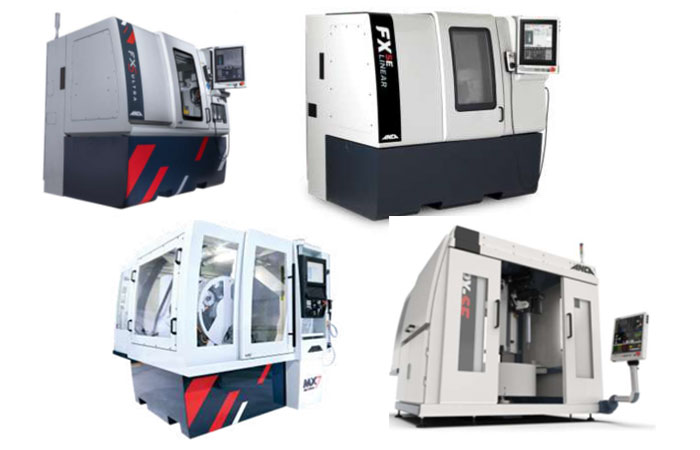
For manufacturers where cost efficiency is critical, the FX5E remains a dominant solution in the 3C market, delivering high precision and flexibility at an accessible price point.
The MX7 ULTRA, sharing the same one-nanometre resolution and ULTRA technology, is engineered for high-volume production environments. Its robust design and enhanced capabilities make it ideal for manufacturers producing large quantities of high-quality tools efficiently and consistently.
Tool Geometry, Edge Preparation, and Repeatability
High-speed machining and short product life cycles have elevated tool geometry optimization, edge preparation, and repeatability to strategic priorities. Optimized geometries influence cutting forces, heat generation, and chip evacuation—factors that are especially critical when machining thin-walled or delicate electronic components.
Precise edge preparation improves tool life and surface finish by reducing micro-chipping and controlling edge strength. Repeatability ensures that every tool performs identically, batch after batch—a non-negotiable requirement in high-volume electronics production.
ANCA addresses these needs through its precision grinding platforms, advanced software, and integrated automation. In-process measurement and automatic compensation systems ensure that tools remain within tolerance throughout extended production runs.
Complementing grinding is ANCA’s EPX-SF edge preparation stream finishing machine, a fully automated 11-axis system with three independent spindles. Using AI-driven recipes, EPX-SF delivers nano-smooth surfaces with roughness below 100 nm, completing multiple processes in a single cycle and digitally tracking production and quality data.
Automation, Digitalization, and Lights-Out Manufacturing
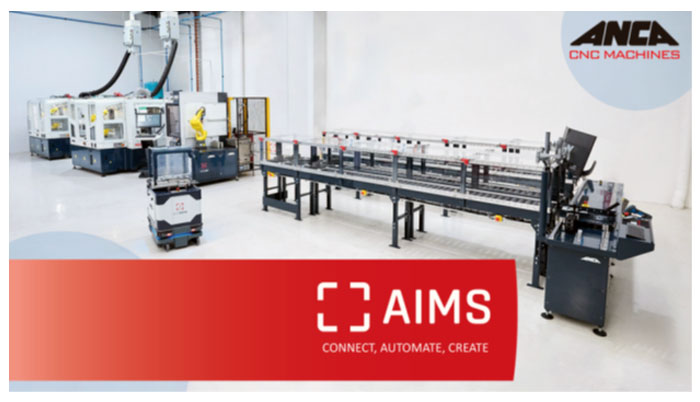
Automation is no longer optional in 3C tooling—it is a strategic necessity. ANCA’s Automated Integrated Manufacturing System (AIMS) enables tool manufacturers to achieve lights-out production, process stability, and Industry 4.0 readiness.
AIMS connects enterprise systems with shopfloor equipment, enabling seamless workflow integration. By shifting tasks such as scheduling and pallet routing offline, machines remain productive for longer periods, significantly increasing utilization.
With real-time guidance, traceability, and automatic compensation for tool wear, AIMS reduces dependence on highly skilled operators—addressing a growing global skills shortage. Customers using AIMS have reported uninterrupted production runs of 66 to 80 hours, delivering consistent results without constant supervision.
India’s Opportunity in the Global 3C Supply Chain
India’s emergence as a strategic hub in the global 3C supply chain presents significant opportunities for domestic tool manufacturers. To move up the value chain, they must deliver high-precision, high-volume, and globally competitive cutting tools, supported by advanced technology and consistent quality.
ANCA positions itself as a long-term technology partner in this journey. With a strong local presence in India, comprehensive application support, training, and turnkey solutions, ANCA is enabling Indian tool manufacturers to adopt advanced practices and compete confidently on the global stage.